
18 Nov 2025
STEVE HARDISTY Q&A
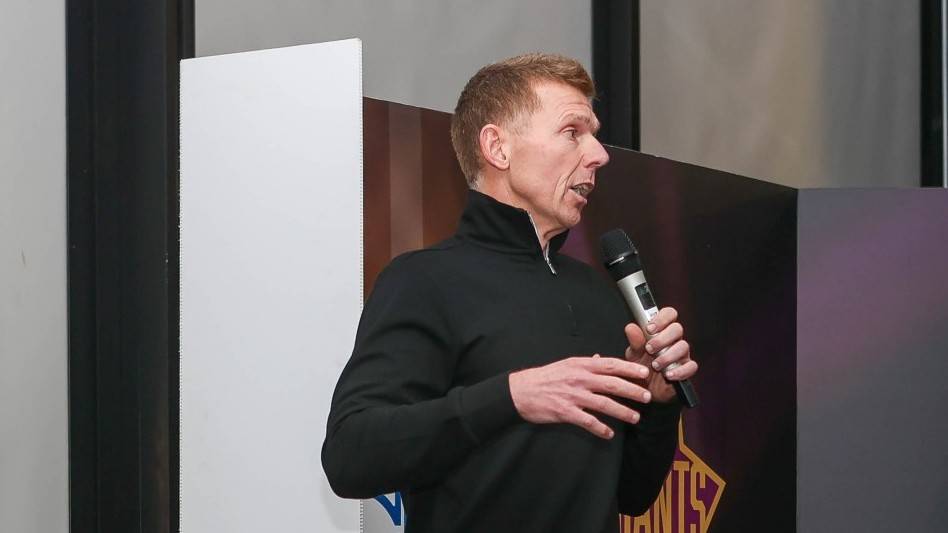
We sat down with returning Organisational Wellbeing Coach Steve Hardisty to discuss a number of topics.
You’re a month into your role as Organisational Wellbeing Coach, first of all how has your first month been back at the Huddersfield Giants?
It's been fantastic. One of the most enjoyable parts has been reconnecting with people and also building brand new connections. I have been so warmly received by everyone therefore the transition into the new role has been made much easier.
Is it a feeling of ‘coming home’ for you coming back to the Giants?
In a way yes, I remember speaking to Ken and Rebecca in the lead up to the process of me coming back and I mentioned to them both I have an emotional attachment to the club, with many friends who remain from when I was here before. Ultimately, those connections have drawn me back to the organisation, so in that sense it does feel like I'm coming back to a level of familiarity. Understandably, both the athlete & staff group has changed dramatically in the time that I have been away, but this provides me with the challenge of developing trust with new people which I’m really enthused about.
As we say it's been a month in post, the work for you started straight away, with preparation with Asher O’Donnell coming over. You picked him up from the airport the other day, getting him embedded into the UK which can be daunting. What does that work entail from start to finish when a player comes over from Australia and in Asher’s case the first time out of Australia?
Meeting Asher has been brilliant, and playing a small part in supporting him to make such a big transition has been great. There are so many things that can be done, well before someone boards the flight over to the UK. We have been talking for several weeks over video call, making a connection and building a good working relationship. These interactions can be very simple but high-quality touch points, nevertheless, just allowing us to build a narrative around Asher. Obviously, a big part of his identity is a professional athlete but there are many other elements to him as a person which are equally important for us to be aware of so that he can feel a real sense of belonging from arriving with us, and we can welcome him into the group more effectively. It’s important to understand what his values are, his living priorities, his likes/dislikes, other interests and who are the people closest to him. In addition to this, I became aware that Asher had not flown long haul before so we did some work together around minimising the effects of jetlag and travel fatigue, so that he could reduce his time to effectiveness and be able to take part in training shortly after arriving and connect with all of his team mates and staff.
Coming away from the athlete side of things and focusing on one word of your job title, it's not player wellbeing its organisation wellbeing. Your role extends beyond the playing group to coaching staff, office staff. Firstly, how important do you feel that is needed, with the culture that has been before but also the culture that Luke, the coaching staff, Ken and yourself are wanting to build for the Huddersfield Giants in the future?
Professional sport places quite unique stressors upon people, and this is not just limited to Athletes. We are working with and around human beings at the end of the day who all have individual needs. We are very much limiting ourselves as an organization if our Wellbeing provision starts and finishes with our Athlete group. Our philosophy towards Wellbeing is one that is developmental, proactive and preventative, where we support individuals to take good care of themselves by building capacity via knowledge & skills that are evidence based.
Our definition of wellbeing is very much directional and involves us working toward our whole person potential and living our life in alignment with our values. Therefore, this definition is inclusive of everyone, regardless of where they are in their personal journey or circumstances. If we can truly say we are moving towards our potential, then regardless of our role at the organisation, we can truly say that we have Wellbeing as a person.
I appreciate there may be times where we must react and support someone who is languishing or has poor levels of Wellbeing, that is sometimes the nature of life, things come out of left field from time to time. However, saying this, there are so many skills and tools that we can apply into our everyday lives which can support us from getting to that crisis point.
What can they expect from you when they approach you, which is not just players but office and coaching staff when they too sometimes may have difficult questions?
I feel like I have the best job in the world and my values are very much aligned with my work and I can bring integrity, kindness and benevolence every day to work with in my interactions with others. I think it’s just about me being consistent in my actions and behaviors, so I remain someone that people have trust in. I could be the greatest practitioner in the world with all the knowledge and skill, but if I can’t build and maintain connections with people then everything else is worthless. I am big on supporting people to build their capacity to take care of themselves through knowledge and skills, so they can feel good and function well and be the very best version of themselves more often.
Partners